Bernard Parmegiani
Explore the best Bernard Parmegiani movies ranked by Movie Rankings users. Browse biography, ranked filmography, and movie detail links for Bernard Parmegiani.
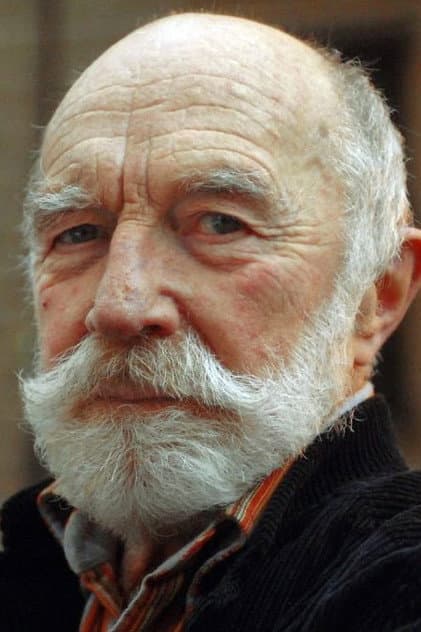
Bernard Parmegiani (27 October 1927 − 21 November 2013) was a French composer best known for his electronic or acousmatic music. Between 1957 and 1961 he studied mime with Jacques Lecoq, a period he later regarded as important to his work as a composer. He joined the Groupe de Recherches Musicales (GRM) in 1959 for a two-year master class, shortly after its founding by Pierre Schaeffer. After leaving his studies with Lecoq, he was first a sound engineer and was later put in charge of the Music/Image unit for French television (ORTF). There he worked in the studio with several notable composers, Iannis Xenakis, for example. While at ORTF Parmegiani produced music for numerous film directors including Jacques Baratier and Peter Kassovitz, and for A, a 1965 short film animated by Jan Lenica. He also wrote a number of jingles for the French media and the "Indicatif Roissy" that preceded every PA announcement at Terminal 1 of Charles de Gaulle Airport in Paris until 2005. Parmegiani composed his first major work, Violostries, for violin and tape in 1964 for a choreography performed for Théâtre Contemporain d'Amiens directed by Jacques-Albert Cartier. During a visit to America in the late 1960s, Parmegiani researched the link between music and video and on his return produced several musical videos, including L'Œil écoute, and L'Écran transparent (1973) during a residency at Westdeutscher Rundfunk in Germany. In the 1970s, he also became involved with live performances of jazz and performed with the Third Ear Band in London. At this time Parmegiani also started writing acousmatic pieces for performance in the concert hall: examples are Capture éphémère of 1967 which deals with the passage of time, and L'Enfer (1972), a collaboration with the composer François Bayle, based on Dante's Divine Comedy. Parmegiani composed the music for Walerian Borowczyk's films Jeux des Anges (1964) and Docteur Jekyll et les femmes (1981), the soundtrack for the latter comprising cues Parmegiani re-arranged from his 1972 work Pour en finir avec le pouvoir d'Orphée. In 1992 Parmegiani left the GRM and set up his own studio in Saint-Rémy-de-Provence. In April 2010 he sat on the jury at the sixth Qwartz Electronic Music Awards, a promotional project and support group for electronic music artists. Parmegiani has been cited as a major influence by younger experimentalists like Aphex Twin, Autechre and Sonic Youth. Works of his were performed at the All Tomorrow's Parties festivals in 2003 and 2008. His music has won awards, among them prizes from the Académie du Disque Français in 1979, SACEM in 1981, Les Victoires de la Musique in 1990, and the Prix Magister at the Concours International de Bourges in 1991. In 1993 he was awarded the Golden Nica Award at Prix Ars Electronica for Entre-temps composed the previous year. Source: Article "Bernard Parmegiani" from Wikipedia in English, licensed under CC-BY-SA 3.0.
What is the best Bernard Parmegiani movie?
Movie Rankings is still collecting enough aggregate data to name a definitive top Bernard Parmegiani movie.
How many Bernard Parmegiani movies are ranked here?
This page tracks every ranked credit we currently have for Bernard Parmegiani, and expands as more titles and comparisons are added.
How often do Bernard Parmegiani rankings update?
These rankings refresh whenever Movie Rankings recomputes global results. This page was last generated from site data on May 4, 2026.
Sources & freshness
Last refreshed from site data on May 4, 2026.