Victor Ullate
Explore the best Victor Ullate movies ranked by Movie Rankings users. Browse biography, ranked filmography, and movie detail links for Victor Ullate.
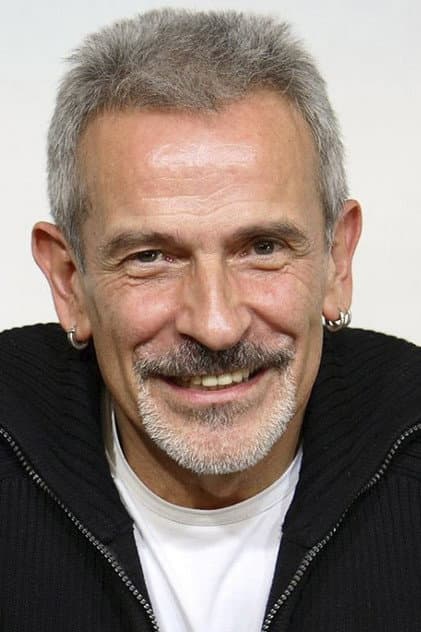
Víctor Ullate (born 9 May 1947, Zaragoza, Spain) is a dancer, choreographer, ballet director and ballet teacher. He studied dance with María de Avila and at the École supérieure de danse de Cannes Rosella Hightower. He began his professional career in 1962 at the age of 15 in the company of the worldwide sought-after Spanish dancer Antonio Ruiz Soler. Three years later he was engaged by Maurice Béjart in his Ballet du XXième Siècle as a Principal Dancer. In the fourteen years of collaboration, Béjart created a number of roles for him, among others Ni fleurs, ni couronnes (1967), Offrande chorégraphique (1970), Nijinsky, Clown de Dieu (1971), Golestan (1973), I trionfi di Petrarca (1974); In Maurice Béjart's Gaîté parisienne (1978) an autobiographical ballet, he incorporated the role of Béjart. Artistic Director and Choreographer In 1979 the Spanish government commissioned him to found the country's first classical ballet company, today Compañia Nacional de Danza, of which he was artistic director for four years. In 1983 he opened his first own school, the Centro de Danza Víctor Ullate, in order to find and educate the missing offspring. In 1988, with the support of the Ministry of Culture, he founded the Víctor Ullate Ballet. officially Spain's first private dance company, of which he has been director for more than 30 years. He brought works by Maurice Béjart, George Balanchine, Hans van Manen, Nils Christe, Jan Linkens, Micha van Hoecke to the stage for his audiences in Spain, South America, Russia, and many European countries. He worked on classics of the repertoire including Les Sylphides, Giselle (after Jules Perrot) and Don Quixote (after Marius Petipa and Alexander A. Gorski), and premiered more than 40 of his own choreographies, often with reference to Spanish music and culture. Some of his most successful pieces choreographed for his own company are: El Amor Brujo (1994),Ven Que Te Tiente (1996), Jaleos(1996), Seguiriya(2000), La Inteligencia de Las Flores(2001), El sur(2005), Samsara(2006), Wonderland (2010), Carmen (2017), finally Antigona (2019, together with choreographer Eduardo Lao). His works are an original combination of classical and neoclassical ballet and flamenco, combining Spanish traditional and classical music. His efforts for individual advancement and the base of technical ability are met by the successes of such personalities as Angel Corella, Lucía Lacarra, Carlos Lopez, Joaquín De Luz, Tamara Rojo, Igor Yebra, Itziar Mendizabal to name just a few of the most internationally known names of the ballet world. In 32 years many hundreds of pupils were starting into a professional dance career after graduating from his school. With the aim of enabling talents without financial resources a universal training for the dance profession and promoting classical ballet in all its forms of expression in Spain, he set up a foundation in 2000. After decades of fruitful work, he closed his ballet company in 2019.,[3][4] the other institutions finally fell victim to the cultural and political change in Spain in 2019–2020. ... Source: Article "Víctor Ullate" from Wikipedia in English, licensed under CC-BY-SA 3.0.
What is the best Victor Ullate movie?
Movie Rankings is still collecting enough aggregate data to name a definitive top Victor Ullate movie.
How many Victor Ullate movies are ranked here?
This page tracks every ranked credit we currently have for Victor Ullate, and expands as more titles and comparisons are added.
How often do Victor Ullate rankings update?
These rankings refresh whenever Movie Rankings recomputes global results. This page was last generated from site data on May 10, 2026.
Sources & freshness
Last refreshed from site data on May 10, 2026.