Francis Ponge
Explore the best Francis Ponge movies ranked by Movie Rankings users. Browse biography, ranked filmography, and movie detail links for Francis Ponge.
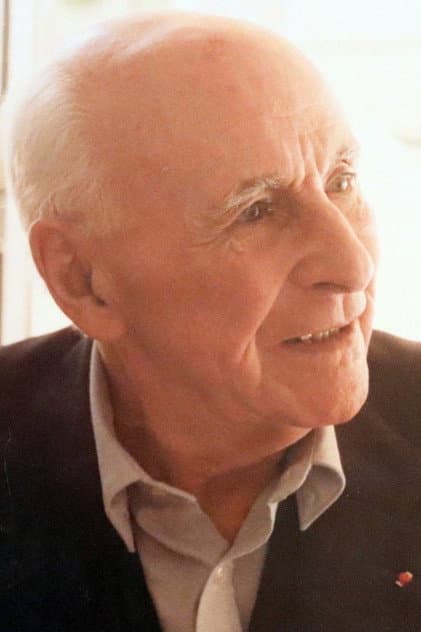
Francis Jean Gaston Alfred Ponge (27 March 1899 – 6 August 1988) was a French essayist and poet. Influenced by surrealism, he developed a form of prose poem, minutely examining everyday objects. He was the third recipient of the Neustadt International Prize for Literature in 1974. Ponge was born into a Protestant family in Montpellier (South of France), the son of Armand Ponge, a banker, and his wife Juliette, née Saurel. He studied in Paris at the Sorbonne and the École de droit where he read law, In 1918–19 he served in the French army. In 1919 he joined the Socialist Party. Ponge worked for the Parisian publishing companies Editions Gallimard (1923–31) and Hachette (1931–37), and before the outbreak of the Second World War he was briefly an insurance salesman. His earliest poems were published in 1923, and he established a reputation in French literary circles, principally for his contributions to the Nouvelle Revue Française. The editor of the publication, Jean Paulhan, became Ponge's mentor, and remained so for many years. Their correspondence continued until Paulhan's death in 1968. During the 1930s Ponge was for a short while associated with the Surrealist movement, influenced by which he joined the Communist Party in 1937. During the Second World War, Ponge joined the French Resistance. He also worked for the National Committee of Journalists, 1942–44 and was literary and artistic director of the communist weekly L'Action 1944–46. He left the Communist Party in 1947. From 1952 to 1965 he held a professorship at the Alliance française in Paris. In 1966 and 1967 he was a visiting professor at Barnard College and Columbia University in the US. In his later years Ponge was a recluse, living at his country house. He died in Le Bar-sur-Loup at the age of 89. Awards made to Ponge included the Neustadt International Prize for Literature (1974), the Académie française's French National Poetry Prize (1981), and the Grand prix of the Société des gens de lettres (1985). He was a Commandeur of the Légion d'honneur (1983). In his work, Le parti pris des choses (often translated The Voice of Things), he meticulously described common things such as oranges, potatoes and cigarettes in a poetic voice, but with a personal style and paragraph form (prose poem) much like an essay. Ponge avoided appeals to emotion and symbolism, and instead sought to minutely recreate the world of experience of everyday objects. He described his own works as "a description-definition-literary artwork" which avoided both the drabness of a dictionary and the inadequacy of poetry. His principal aim was to avoid stereotypical thinking. In Le Grand Recueil (The Grand Collection), published in 1961 he explained his "concentration on simple objects – stones, grass, directed towards a restoration of the power and purity of language," according to his obituary in The Times. ... Source: Article "Francis Ponge" from Wikipedia in English, licensed under CC-BY-SA 3.0.
What is the best Francis Ponge movie?
Movie Rankings is still collecting enough aggregate data to name a definitive top Francis Ponge movie.
How many Francis Ponge movies are ranked here?
This page tracks every ranked credit we currently have for Francis Ponge, and expands as more titles and comparisons are added.
How often do Francis Ponge rankings update?
These rankings refresh whenever Movie Rankings recomputes global results. This page was last generated from site data on May 6, 2026.
Sources & freshness
Last refreshed from site data on May 6, 2026.