Roger Caillois
Explore the best Roger Caillois movies ranked by Movie Rankings users. Browse biography, ranked filmography, and movie detail links for Roger Caillois.
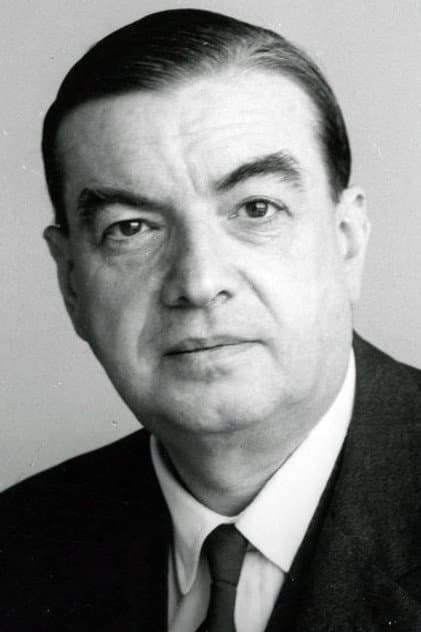
Roger Caillois (3 March 1913 – 21 December 1978) was a French intellectual whose idiosyncratic work brought together literary criticism, sociology, ludology and philosophy by focusing on diverse subjects such as games and play as well as the sacred. He was also instrumental in introducing Latin American authors such as Jorge Luis Borges, Pablo Neruda and Miguel Ángel Asturias to the French public. After his death, the French Literary award Prix Roger Caillois was named after him in 1991. Caillois was born in Reims, but moved to Paris as a child. There he studied at the Lycée Louis-le-Grand, an elite school where students took courses after graduating from secondary school in order to prepare for entry examinations for France's most prestigious university, the École Normale Supérieure. Caillois's efforts paid off and he graduated as a normalien in 1933. After this he studied at the École Pratique des Hautes Études, where he came into contact with thinkers such as Georges Dumézil, Alexandre Kojève and Marcel Mauss. The years before the war were marked by Caillois's increasingly leftist political commitment, particularly in his fight against fascism. He was also engaged in Paris's avant-garde intellectual life. With Georges Bataille he founded the College of Sociology, a group of intellectuals who lectured regularly to one another. Formed partly as a reaction to the Surrealist movement that was dominant in the 1920s, the College sought to move away from surrealism's focus on the fantasy life of an individual's unconscious and focus instead more on the power of ritual and other aspects of communal life. Caillois's background in anthropology and sociology, and particularly his interest in the sacred, exemplified this approach. He participated in Bataille's review Acéphale (1936–39). Caillois left France in 1939 for Argentina, where he stayed until the end of World War II. During the war he was active in fighting the spread of Nazism in Latin America as an editor and author of anti-Nazi periodicals. From 1940 to 1945, he lived in South America. In 1948, after the War, he worked with UNESCO and traveled widely. In 1971 he was elected to the Académie française. In 1977, he started to write a book with the painter Bernard Mandeville. In 1978, Caillois wrote Le fleuve Alphée, an award-winning autobiographical essay (Marcel Proust Awards and European Union Prize for Literature), followed by Cases d’un échiquier. He died, aged 65, in Kremlin-Bicêtre. Today Caillois is remembered for founding and editing Diogenes, an interdisciplinary journal funded by UNESCO, and La Croix du Sud (Southern Cross), a collection of books translated from contemporary Latin American authors published by Gallimard that is responsible for introducing authors such as Jorge Luis Borges, Alejo Carpentier and Victoria Ocampo to the French-speaking public. He is also widely cited in the nascent field of ludology, primarily from passages in his book Les Jeux et les Hommes(1958). The book has been translated to English by Meyer Barash in 1961 as Man, Play and Games. ... Source: Article "Roger Caillois" from Wikipedia in English, licensed under CC-BY-SA 3.0.
What is the best Roger Caillois movie?
Movie Rankings is still collecting enough aggregate data to name a definitive top Roger Caillois movie.
How many Roger Caillois movies are ranked here?
This page tracks every ranked credit we currently have for Roger Caillois, and expands as more titles and comparisons are added.
How often do Roger Caillois rankings update?
These rankings refresh whenever Movie Rankings recomputes global results. This page was last generated from site data on May 7, 2026.
Sources & freshness
Last refreshed from site data on May 7, 2026.