Maurice Clavel
Explore the best Maurice Clavel movies ranked by Movie Rankings users. Browse biography, ranked filmography, and movie detail links for Maurice Clavel.
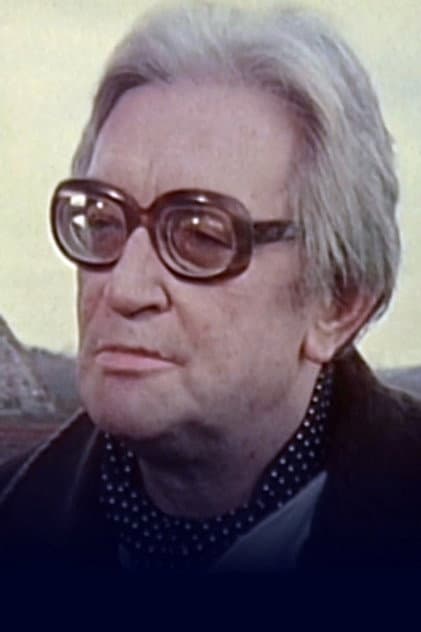
Maurice Clavel (1920-1979) was a French writer, journalist, and philosopher. Maurice Clavel was born on 10 November 1920 in Frontignan, Hérault to a family headed by a father who was a pharmacist. This conservative milieu of small shopkeepers in Languedoc led him to be an activist in the French Popular Party (FPP) in his hometown of Frontignan. A brilliant pupil, he got into the prestigious École Normale Supérieure in the Rue d'Ulm in Paris. There he became acquainted with Trotskyist Jean-Toussaint Desanti and Maurrassian Pierre Boutang. The latter, having been appointed in the Secretariat of Public Instruction, invited him to serve by his side under Marshal Philippe Pétain. Having just gotten his certificate of morale and sociology in Montpellier, Maurice Clavel accepted but was soon disillusioned. While preparing a thesis on Immanuel Kant, he then joined the Résistance (1942). As head the French Forces of the Interior of Eure-et-Loir, he took part in the liberation of Chartres where he greeted General Charles de Gaulle on the cathedral's forecourt. At the Libération, he denounced the blind epuration and tried to save the heads of Robert Brasillach and Drieu La Rochelle. That did not prevent him from being a fervent activist in the Rally of the French People (RPF) whose acerbic criticism of communism got him to be accused by the French Communist Party (PCF) of being "Goebbels' voice". He then founded with Henri d'Astier de La Vigerie and André Figueras a newspaper called L'Essor. Meanwhile, he wrote plays directed by Jean Vilar like Les Incendiaires (The Incendiaries) in 1947 or La Terrasse de midi (The Noon Terrace) in 1949. But those failed, and as he was torn apart after breaking his relationship with the actor Silvia Monfort, Clavel accepted a professor tenure in the Carnot high school in Dijon. Barely liked by his superiors, he soon got back to theatrical works when, in 1951, Jean Vilar appointed him as secretary-general of the Théâtre National Populaire. But his new play Malsameda (1954) as well as his first novel Une fille pour l'été (A Girl for the Summer, 1955) turned out to be failures too. From 1955, Clavel started his career as a journalist writing in Combat. Protesting, among other things, against the invasion of Hungary by Soviet tanks in 1956, and the use of torture in Algeria, he got involved with left-wing Gaullists in the Democratic Union of Labour in 1959. Meanwhile, he went back to teaching as philosophy professor in Camille Sée and Buffon high school in Paris, from 1960 to 1963. With Emmanuel Berl, he presented a daily radio programme Qui êtes-vous? (Who are you?). But after the refusal by managers of the radio station to grant Jean Daniel a right of reply about Algeria, he resigned. The following year, after publishing Le Temps de Chartres (The Times of Chartres), he ceased his regular contribution to Combat. However he kept supporting General De Gaulle's position on Algeria, who entrusted him to engage in a dialogue with Messali Hadj. ... Source: Article "Maurice Clavel" from Wikipedia in English, licensed under CC-BY-SA 3.0.
What is the best Maurice Clavel movie?
Movie Rankings is still collecting enough aggregate data to name a definitive top Maurice Clavel movie.
How many Maurice Clavel movies are ranked here?
This page tracks every ranked credit we currently have for Maurice Clavel, and expands as more titles and comparisons are added.
How often do Maurice Clavel rankings update?
These rankings refresh whenever Movie Rankings recomputes global results. This page was last generated from site data on May 4, 2026.
Sources & freshness
Last refreshed from site data on May 4, 2026.